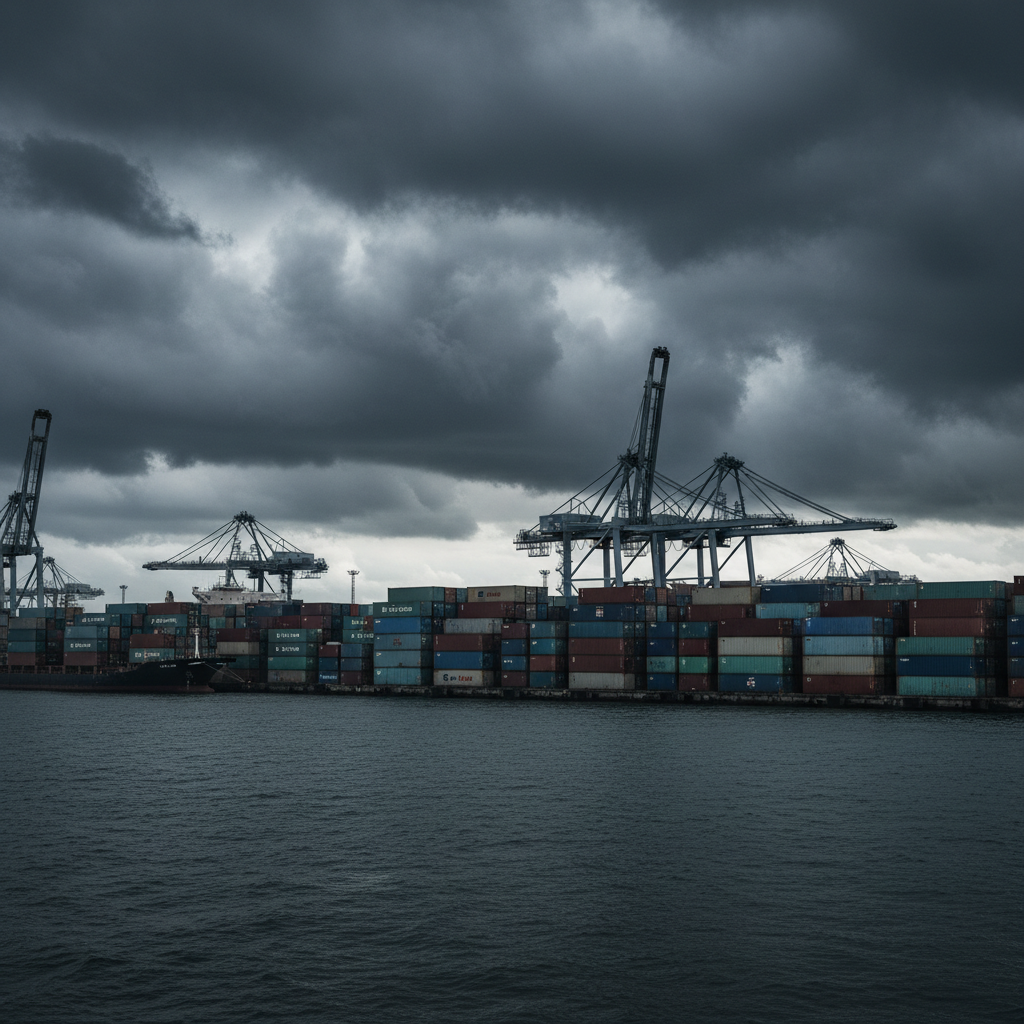
The FAO Warning
In late April 2026, the Food and Agriculture Organization of the United Nations (FAO) issued an urgent advisory flagging the Strait of Hormuz as a critical chokepoint threatening global food trade stability. The statement noted that any sustained disruption to maritime passage through the Strait — through which an estimated 20% of globally traded goods transit — would have cascading consequences for food commodity availability and pricing well beyond the Middle East region.
For European and Asian food manufacturers, the concern is immediate and practical: key supply routes for dairy ingredients, food additives, and specialty chemicals used in food production run directly through or are priced relative to Persian Gulf logistics.
Why the Strait of Hormuz Matters for Food Supply Chains
The Strait of Hormuz connects the Persian Gulf to the Gulf of Oman and the Arabian Sea. Its significance for food trade is often underestimated by buyers focused on Red Sea or Suez Canal risk — but it is equally critical for several reasons:
- Gulf state re-export hubs — Dubai (Jebel Ali), Abu Dhabi, and Oman serve as major transshipment and distribution hubs for food ingredients moving between Asia, Africa, and Europe
- Energy price transmission — Persian Gulf energy disruption feeds directly into global freight cost inflation and chemical feedstock pricing, both critical inputs for food additive manufacturing
- Regional demand concentration — GCC countries are among the world's largest per-capita importers of dairy ingredients, and any supply disruption redirects buying pressure to global spot markets
- Petrochemical supply chains — many food-grade additives (emulsifiers, acidity regulators, preservatives) have production processes dependent on petrochemical derivatives that are priced off Gulf energy benchmarks
Impact on Food Additives
Supply Chain Disruption Risk
Food additives — including citric acid, sodium benzoate, xanthan gum, potassium sorbate, and ascorbic acid — are predominantly manufactured in China and India, with a significant share of global volume transiting through Gulf ports for distribution to the Middle East, Africa, and parts of Europe.
A sustained Strait of Hormuz disruption would:
- Reroute vessels to longer Cape of Good Hope or alternative routes, adding 10–18 days to transit times and significant freight costs
- Reduce cargo availability at Gulf transshipment hubs, creating bottlenecks for buyers in the region
- Tighten spot availability globally as buyers front-load purchasing to build buffer stock
Pricing Impact
Even without a full closure scenario, market uncertainty alone is sufficient to move additive prices. Historical precedent from the 2021 Suez Canal blockage and the 2024 Red Sea crisis showed that futures and spot prices for traded food inputs react within days of perceived shipping risk.
In Q1 2026, pre-existing freight premiums from the Red Sea crisis had already pushed average landed costs for Chinese-origin additives to EU ports up by an estimated 12–18% versus 2023 baselines. A Hormuz escalation would compound this further.
| Additive | Pre-Crisis Trend | Risk-Adjusted Outlook | |---|---|---| | Citric Acid | Stable–slightly easing | Upward pressure, +8–12% risk | | Xanthan Gum | Firm, limited supply | High vulnerability, +10–15% | | Ascorbic Acid (Vit C) | Easing from 2024 highs | Moderate risk, +6–10% | | Potassium Sorbate | Stable | Moderate risk, +5–8% | | Sodium Benzoate | Slightly soft | Low–moderate risk |
Indicative risk-adjusted ranges. Actual prices subject to contract terms, origin, and market development.
Impact on Dairy Ingredients
The Gulf as a Critical Dairy Market
GCC countries — Saudi Arabia, UAE, Kuwait, Qatar, Bahrain, Oman — collectively represent one of the most import-dependent dairy markets in the world. With limited domestic production capacity, the region relies almost entirely on imported skimmed milk powder (SMP), whole milk powder (WMP), butter, whey, and UHT milk from Europe, Oceania, and the Americas.
Any scenario that restricts access to Gulf ports or creates import uncertainty in GCC markets has a direct effect on global dairy commodity pricing because:
- GCC buyers pivot to spot market purchasing, absorbing available inventory and tightening global supply
- European processors redirect volumes to meet Gulf demand at premium pricing, reducing availability for other markets
- Speculative buying from trading desks amplifies price movement beyond fundamental supply-demand shifts
Current Dairy Market Conditions
Entering Q1–Q2 2026, the dairy market was already navigating a complex environment:
- EU milk production grew modestly but remained below processor capacity needs in some categories
- SMP prices had firmed through Q1 2026, trading in the €2,050–€2,200/MT range CIF EU ports
- WMP saw stronger demand from Asia and the Middle East, pushing prices to €3,800–€4,000/MT
- Butter remained elevated at €6,800–€7,400/MT amid sustained retail and foodservice demand
A Hormuz disruption scenario adds meaningful upside price risk across all categories, with WMP and SMP most exposed due to their heavy reliance on Gulf market absorption.
What the FAO Advisory Specifically Flags
The FAO advisory highlighted three specific risk scenarios:
-
Partial disruption — increased military activity or vessel interdiction creating insurance cost spikes and voluntary rerouting. Estimated freight cost impact: +15–25% on Gulf-transiting cargo.
-
Full transit restriction — a scenario the FAO calls "low probability but high consequence," triggering emergency stock releases, export restrictions by producing countries, and sustained price inflation across all food commodity classes.
-
Prolonged uncertainty — even without physical disruption, sustained geopolitical tension causes buyers to overbuy defensively, distorting normal inventory cycles and creating artificial tightness in global markets.
The FAO noted that the most vulnerable importers are food-import-dependent nations in North Africa, the Levant, and sub-Saharan Africa — many of whom source through Gulf hub ports and hold minimal strategic food reserves.
Market Turbulence: The Bigger Picture
The Hormuz situation does not exist in isolation. It compounds a series of existing market stressors that were already creating turbulence for ingredient buyers in 2026:
- Red Sea / Suez alternative routing adding baseline freight cost inflation
- US tariff policy uncertainty affecting Chinese-origin ingredient pricing and trade flows
- EU Deforestation Regulation increasing compliance costs for tropical commodity supply chains
- European energy price volatility feeding into domestic food processing input costs
- La Niña weather pattern threatening Northern Hemisphere crop yields in H2 2026
The cumulative effect is a market environment where risk management has become as important as price management for procurement teams.
Practical Recommendations for Buyers
Additives buyers:
- Review current stock cover and consider extending to 8–12 weeks for key ingredients with Gulf-dependent supply chains
- Assess origin diversification — European and Indian-manufactured alternatives for some additives may offer supply chain resilience even at a modest price premium
- Lock in forward pricing where possible on high-exposure ingredients (xanthan gum, citric acid)
Dairy buyers:
- Monitor GCC buying activity as a leading indicator — increased Gulf spot purchasing typically precedes European price moves by 2–4 weeks
- Ensure contract language includes force majeure and freight adjustment provisions
- Consider blending EU and Oceania-origin supply to reduce single-origin concentration risk
Foodiglobal's Position
Foodiglobal monitors geopolitical and logistics risk as a core part of our supply advisory function. We supply food additives and dairy ingredients directly to European buyers and maintain relationships across multiple supply origins to ensure continuity in volatile conditions.
If you want to discuss your current exposure or explore contingency sourcing options, reach out to our team directly.