Vanilla: The Gourmet Spice and Its Wild Price Ride
Vanilla is the world's second-most expensive spice after saffron, and for good reason. Every vanilla pod is the fruit of a delicate orchid that must be hand-pollinated, hand-harvested, and cured over months. Roughly 80% of the global supply comes from a single island — Madagascar — which makes the market extraordinarily vulnerable to weather, politics, and speculation.
For gourmet food brands and extract manufacturers, understanding vanilla's price history isn't just academic. It's the difference between locking in a fair contract and getting caught in a spike that wipes out margins.
Why Vanilla Is So Volatile
Several structural factors make vanilla uniquely prone to price shocks:
- Geographic concentration — Madagascar's Sava region produces the vast majority of Bourbon-quality vanilla. A single cyclone can wipe out a year's harvest.
- Long production cycle — A vanilla vine takes 3–4 years to produce its first pods. Supply cannot respond quickly to price signals.
- Hand pollination & labor intensity — There is no mechanized way to pollinate or cure vanilla at scale. Yields depend on human hands.
- Speculative stocking — Farmers and middlemen hold green vanilla in anticipation of price rises, amplifying swings.
- Synthetic substitute ceiling — When natural vanilla gets too expensive, buyers switch to synthetic vanillin (derived from lignin or petrochemicals), capping demand at the top.
The Price Timeline (2014–2025)
| Year | Approx. Price (USD/kg, cured beans) | Key Driver | |------|--------------------------------------|-----------| | 2014 | $25–40 | Stable, post-2008 recovery | | 2015 | $60–80 | Early supply tightening | | 2016 | $150–200 | Poor flowering season | | 2017 | $500–600 | Cyclone Enawo devastates Madagascar | | 2018 | $450–550 | Speculative peak, hoarding | | 2019 | $300–400 | New harvest eases shortage | | 2020 | $250–300 | COVID demand drop | | 2021 | $200–250 | Market correction | | 2022 | $150–200 | Oversupply from 2018 plantings | | 2023 | $100–150 | Continued normalization | | 2024 | $60–90 | Return to long-term trend | | 2025 | $50–70 | Stable, healthy stocks |
The 2017 Spike
In March 2017, Cyclone Enawo struck Madagascar's vanilla-producing northeast, destroying an estimated 30% of the crop. Prices rocketed from around $150/kg to over $600/kg within months — a 4x increase. Many gourmet brands reformulated to lower-grade beans or blended with synthetic vanillin to survive. Small-batch ice cream makers and pastry chefs were hit hardest.
The Long Descent (2018–2024)
The 2017 spike triggered a planting boom as farmers across Madagascar, Indonesia, and even Papua New Guinea expanded acreage. But because vanilla takes 3–4 years to yield, that new supply only hit the market around 2020–2022. Combined with pandemic-era demand softening, prices entered a multi-year decline:
- 2020–2021: COVID reduced foodservice and ice cream demand, accelerating the drop.
- 2022–2023: New plantings matured, creating oversupply. Prices fell below $150/kg.
- 2024: Prices returned to pre-2017 levels as stocks normalized.
Where We Are Now (2025)
Vanilla is currently trading in the $50–70/kg range for standard Bourbon-quality cured beans, with premium gourmet-grade pods (long, supple, high-vanillin) commanding $80–120/kg. This is close to the long-term historical average, making it a relatively good time for buyers to lock in contracts.
Gourmet vs. Extract Grade: What Buyers Should Know
Not all vanilla is created equal. The market splits broadly into two tiers:
Gourmet Grade
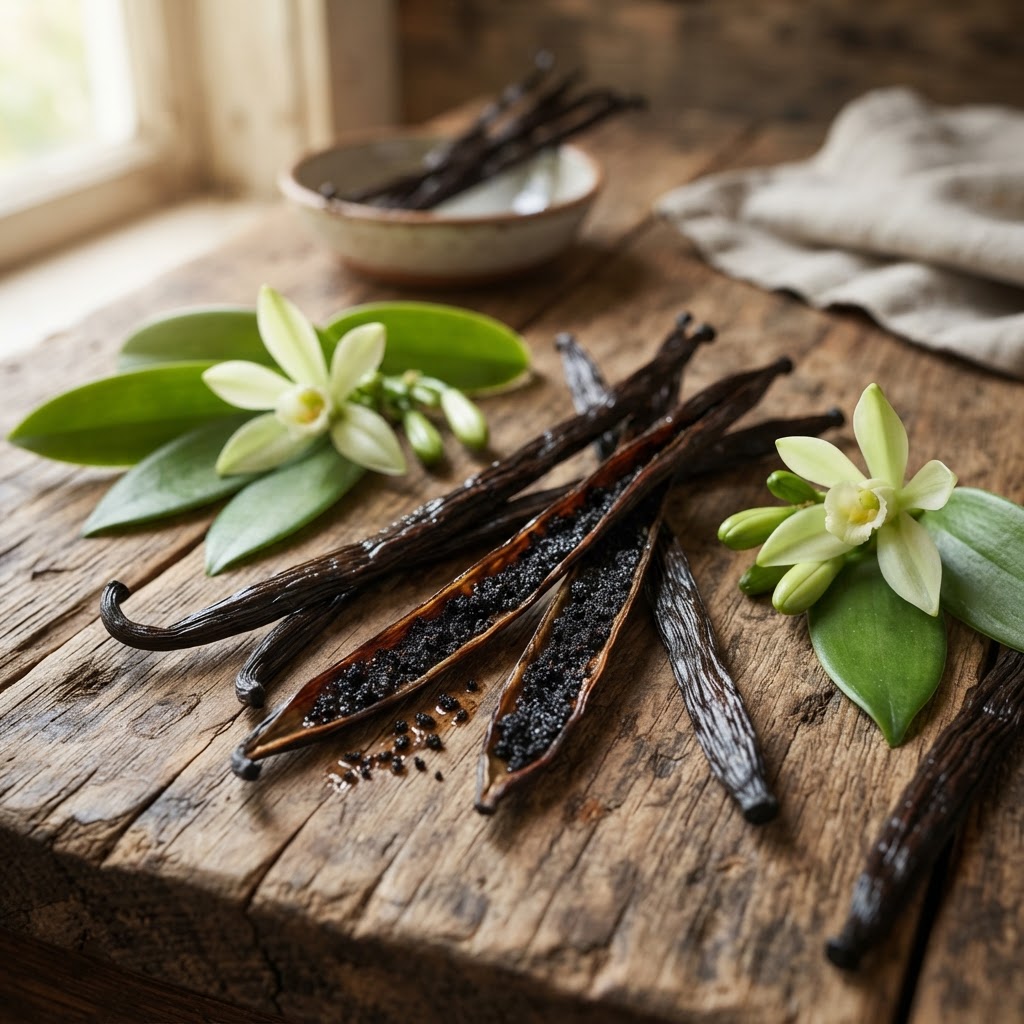
- Appearance: Long, dark, oily pods, often 15–18 cm, high moisture (30–35%)
- Use: Pastry, ice cream, whole-bean infusions where visual and aromatic quality matters
- Price premium: 40–80% above extract grade
- Key markets: France, Belgium, Japan, high-end US foodservice
Extract / Industrial Grade
- Appearance: Shorter, drier, split or broken pods, lower vanillin
- Use: Vanilla extract, flavor compounding, industrial food manufacturing
- Price: Tracks the commodity curve more closely
- Key markets: Large FMCG, beverage, dairy manufacturers
For extract manufacturers, the cut and vanillin content matter more than pod aesthetics. For gourmet buyers, appearance, flexibility, and aroma define value.
Sourcing Strategy: How to Weather the Next Swing
Given vanilla's history, procurement teams should consider:
- Multi-origin sourcing — Blend Madagascar with Indonesian, Ugandan, and PNG vanilla to reduce single-region risk.
- Contract timing — Buy during the May–July Madagascar harvest season when supply is freshest and prices softest.
- Stock buffering — Maintain 6–9 months of inventory to ride out short-term shocks.
- Grade flexibility — Specify extract-grade for industrial use; don't overpay for gourmet appearance you don't need.
- Relationship investment — Work with exporters who pay farmers fairly and can guarantee continuity in bad years.
Outlook for 2026
Most analysts expect vanilla to remain stable in the $50–80/kg range through 2026, with modest upside risk if the 2026 flowering season underperforms or a major cyclone hits Madagascar. There is no immediate shortage, but the structural fragility of the market means a repeat of 2017 cannot be ruled out in the coming years.
For gourmet and extract buyers alike, the lesson of the last decade is clear: vanilla rewards those who plan ahead and punishes those who react late.
Foodiglobal sources premium gourmet and extract-grade vanilla from Madagascar, Indonesia, and Uganda with full traceability and dual-layer quality verification. Contact us to discuss your vanilla sourcing needs.