A Commodity Under Pressure
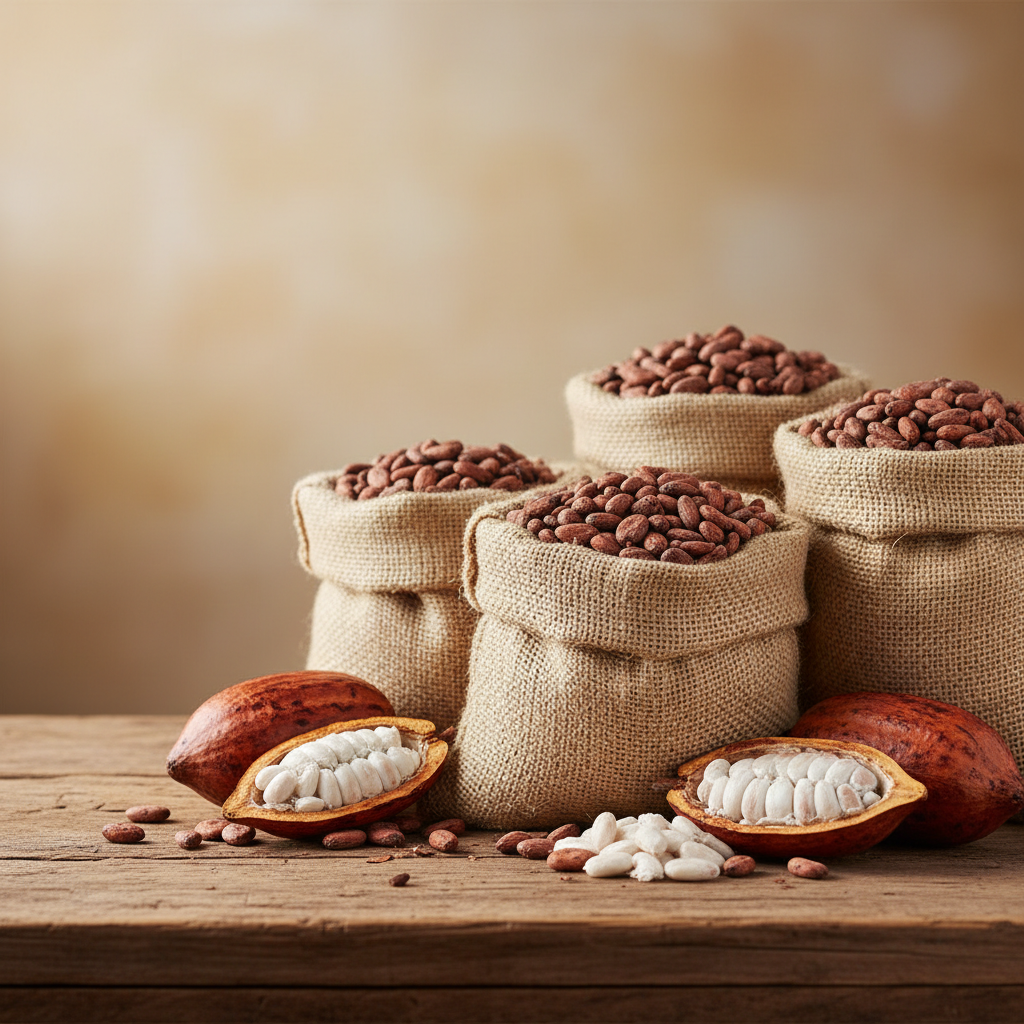
Cocoa has rarely attracted this level of market attention. Over 2024 and into 2025, cocoa futures surged to record highs above $10,000 per metric tonne — a level unimaginable just three years earlier. While prices have partially retraced from those peaks, the underlying structural issues remain unresolved, and the industry is at a genuine inflection point.
For food manufacturers, confectionery brands, and ingredient buyers, the question is no longer just about price — it is about the long-term reliability of cocoa supply itself.
What Is Driving the Uncertainty?
Climate Stress in West Africa
Approximately 70% of global cocoa supply comes from Côte d'Ivoire and Ghana. Both nations have experienced increasingly erratic rainfall patterns, prolonged dry seasons, and the accelerating spread of Black Pod disease and Swollen Shoot virus — two fungal and viral threats that devastate harvests.
The 2023/2024 main crop in West Africa came in well below expectations, triggering the supply deficit that sent futures spiralling. The 2025 crop showed some recovery, but forecasters remain cautious about 2026 output given continued soil degradation and ageing tree stock — the average cocoa tree in Ghana is estimated to be over 30 years old, well past peak productivity.
Structural Supply Deficit
The International Cocoa Organization (ICCO) has flagged a persistent supply-demand deficit that is unlikely to self-correct without significant investment in smallholder productivity. Global demand — particularly from Asia — continues to grow, while supply expansion is constrained by:
- Land availability in producing regions
- Deforestation regulation (the EU Deforestation Regulation now applies to cocoa)
- Low farm-gate prices historically failing to incentivise new planting
- Long lead times — a newly planted cocoa tree takes 3 to 5 years to produce commercially viable fruit
Price Trends: 2025 and the Q1 2026 Picture
After the historic spike above $10,000/MT in early 2024, cocoa futures settled into a range of $7,500–$9,000/MT through much of 2025 — still dramatically elevated versus the $2,500–$3,000/MT range of 2021–2022.
| Period | Cocoa Futures (USD/MT) | Key Driver | |---|---|---| | 2021–2022 | $2,400–$3,000 | Stable supply, moderate demand | | 2023 | $3,500–$5,000 | Early supply concerns | | 2024 (peak) | $10,000+ | Severe West Africa crop failure | | 2025 average | $7,500–$9,000 | Partial recovery, structural deficit | | Q1 2026 | $6,800–$8,200 | Easing but uncertainty persists |
In Q1 2026, prices have eased slightly on the back of better-than-expected mid-crop output from Côte d'Ivoire and some speculative unwinding. However, buyers remain cautious about reading this as a sustained downtrend — the structural supply issues have not been resolved.
New Technology for Sustainable Cocoa Production
The crisis has accelerated investment in production technology that would have seemed fringe just five years ago. Three categories stand out.
Precision Fermentation & Lab-Grown Cocoa Flavour
Companies including California Cultured and Voyage Foods are developing cocoa-flavour compounds produced via precision fermentation — using microorganisms to replicate the flavour molecules of cacao without growing a single tree. These are not yet at commercial food-manufacturing scale, but pilot programmes are underway with major confectionery brands.
High-Yield and Disease-Resistant Varieties
Agricultural research institutions in Ghana, Côte d'Ivoire, and internationally have developed new hybrid cocoa varieties that offer:
- 30–50% higher yield per hectare versus traditional varieties
- Improved resistance to Black Pod disease
- Shorter maturity periods — some as low as 18–24 months to first pod
Rollout to smallholder farmers remains slow due to access, financing, and trust barriers, but NGO and government programmes are scaling distribution.
Agroforestry and Regenerative Models
The EU Deforestation Regulation (EUDR), which requires supply chain traceability and proof that cocoa was not grown on recently deforested land, is driving a shift toward agroforestry models — intercropping cocoa with shade trees. These systems:
- Improve biodiversity and soil health
- Reduce temperature stress on cocoa trees
- Create carbon sequestration opportunities that can be monetised
- Increase long-term yield stability
Several major chocolate brands have committed to 100% agroforestry-sourced cocoa by 2030, creating a pull signal throughout the supply chain.
Environmental Impact: A Double-Edged Story
Cocoa has historically been a significant driver of tropical deforestation. The WWF estimates that cocoa farming has contributed to the loss of 2–3 million hectares of forest in West Africa over the past three decades.
The sector is now under intense pressure from:
- EUDR compliance requirements (full enforcement from end of 2025)
- NGO campaigning and brand reputation risk
- Consumer demand for certified sustainable chocolate
However, the sustainability transition itself is not without complexity. Shifting to certified, traceable, agroforestry cocoa increases production costs by an estimated 15–25% — costs that will inevitably be passed upstream. For ingredient buyers, this means sustainable cocoa will come at a premium, and that premium is only expected to grow.
Plant-Based Cocoa Alternatives: The Emerging Frontier
Perhaps the most disruptive development is the rise of cocoa-free alternatives targeting the flavour, colour, and functionality of real cocoa. Several ingredients are gaining traction:
Carob
Carob powder, derived from the carob tree (Ceratonia siliqua), is the most established cocoa alternative. It is naturally sweet, caffeine-free, and requires significantly less water and land than cocoa cultivation. Carob demand in the EU grew by an estimated 18–22% in 2024–2025 as confectionery manufacturers sought both cost savings and supply resilience.
Fenugreek and Lupin-Based Compounds
Emerging startups are developing roasted, processed blends of fenugreek, lupin, and sunflower seeds that mimic cocoa's bitterness profile. These are being positioned as functional, allergen-managed, locally-grown alternatives — particularly attractive given EU buyers' preference for near-shoring supply chains.
Precision-Fermented Cocoa Flavour
As mentioned above, fermentation-derived cocoa flavour compounds are advancing rapidly. While full replacement of cocoa butter functionality remains a challenge, flavour replication for mass-market applications — beverages, coatings, flavoured snacks — is increasingly viable.
Market Outlook for Alternatives
The plant-based cocoa alternatives market is projected to grow at a CAGR of 7–9% through 2030, driven by:
- Sustained cocoa price pressure
- EUDR compliance complexity pushing buyers to explore alternatives
- Consumer acceptance of "cocoa-free" chocolate-style products in specific segments (health, functional, allergen-free)
What This Means for Ingredient Buyers
The cocoa market in 2026 is one of the most complex in a generation. Buyers need to:
- Diversify sourcing — consider blending real cocoa with alternatives for applications where full sensory replication is not essential
- Build longer forward cover — spot market exposure in cocoa is increasingly risky
- Engage with EUDR documentation early — non-compliant cocoa will face EU market access restrictions
- Watch the alternatives space — carob, fermentation-derived flavours, and compound alternatives may offer meaningful cost relief within the next 12–24 months
Foodiglobal's View
We are closely monitoring cocoa and cocoa-adjacent ingredient supply for our European buyer network. As the market evolves, we are building sourcing relationships across both certified sustainable cocoa origins and alternative ingredient categories to ensure our clients have options.
If you are managing cocoa exposure in your supply chain and want to discuss alternatives or forward sourcing strategies, contact our team for a direct conversation.